
How to Deal with Vitamin B12 Deficiency
How to Deal with Vitamin B12 Deficiency Vitamin B12 is also known as cobalamin. It is a complex B-complex vitamin. It is essential for the health of the brain, heart, and blood vessels.
what is Vitamin B12?
Vitamin B12 is also known as cobalamin. It is a complex B-complex vitamin. It is essential for the health of the brain, heart, and blood vessels.
Why is there a lack of vitamin B12?
1. Insufficient diet—mostly found in vegetarians, because B12 is found in excess mainly in mutton.
2. Defects in the digestive system, such as:
o (abdominal muscles are severely weakened)
o (inhibition of B12 absorption)
o (part of the right intestine)
3. B12 levels decrease with age.
4. In a person taking medications—such as
o Metformin (for patients taking diabetes medication)
o Anti-acidic drugs (such as high levels of acidity and taking medication)
5. Consuming too much alcohol can lead to a deficiency of B12.
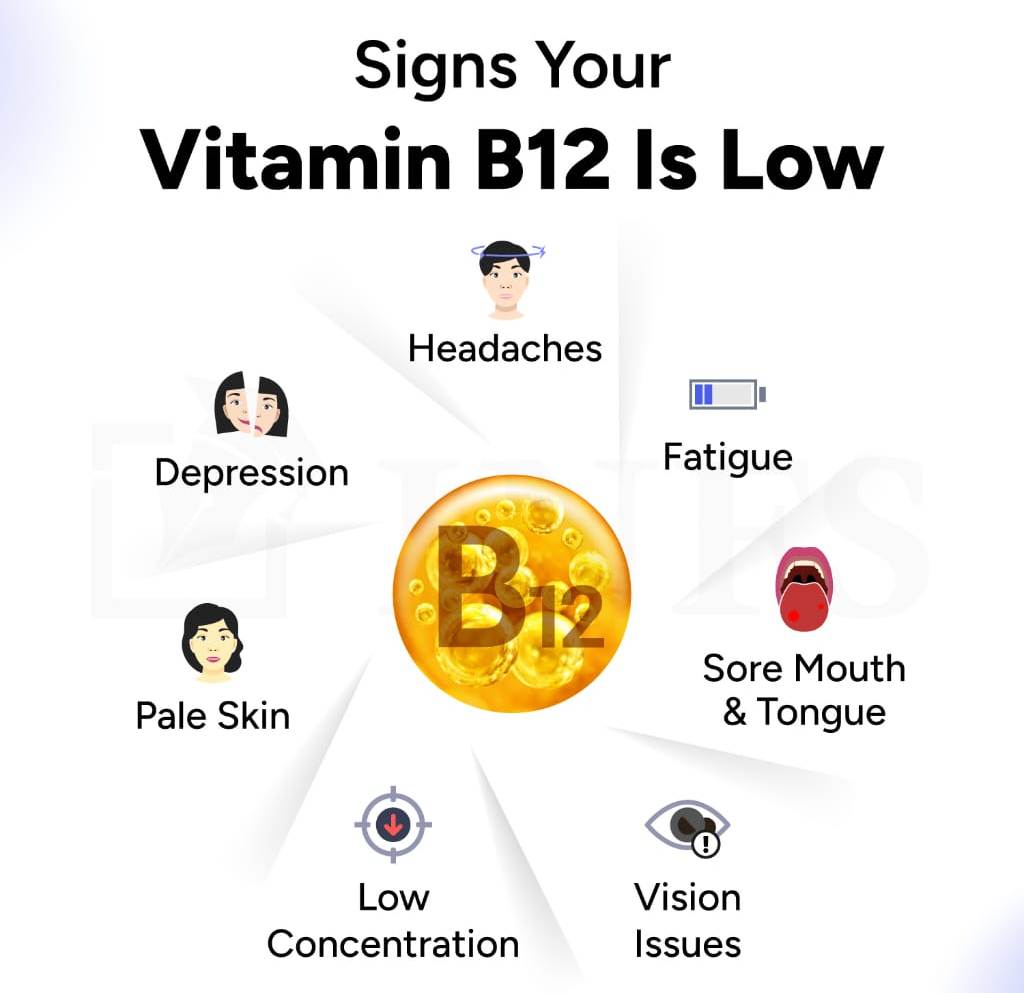
Signs and symptoms of B12 deficiency
• Feeling fatigued
don’t starve.
Yellowing of the skin
• Swelling in the hands/feet
• Difficulty in walking
• Difficulty concentrating and memory loss
• Redness or pain in the mouth
• Increased depression
Could it be checked?
• A serum vitamin B12 test—normal levels are 200-900 pg/Mr.
• Deficiency is considered if the level of B12 is within < 200 pg/mL.
• Other tests: methylmalonic acid (MMA), homocysteine, complete blood count (CBC)
What’s its treatment? (Treatment)
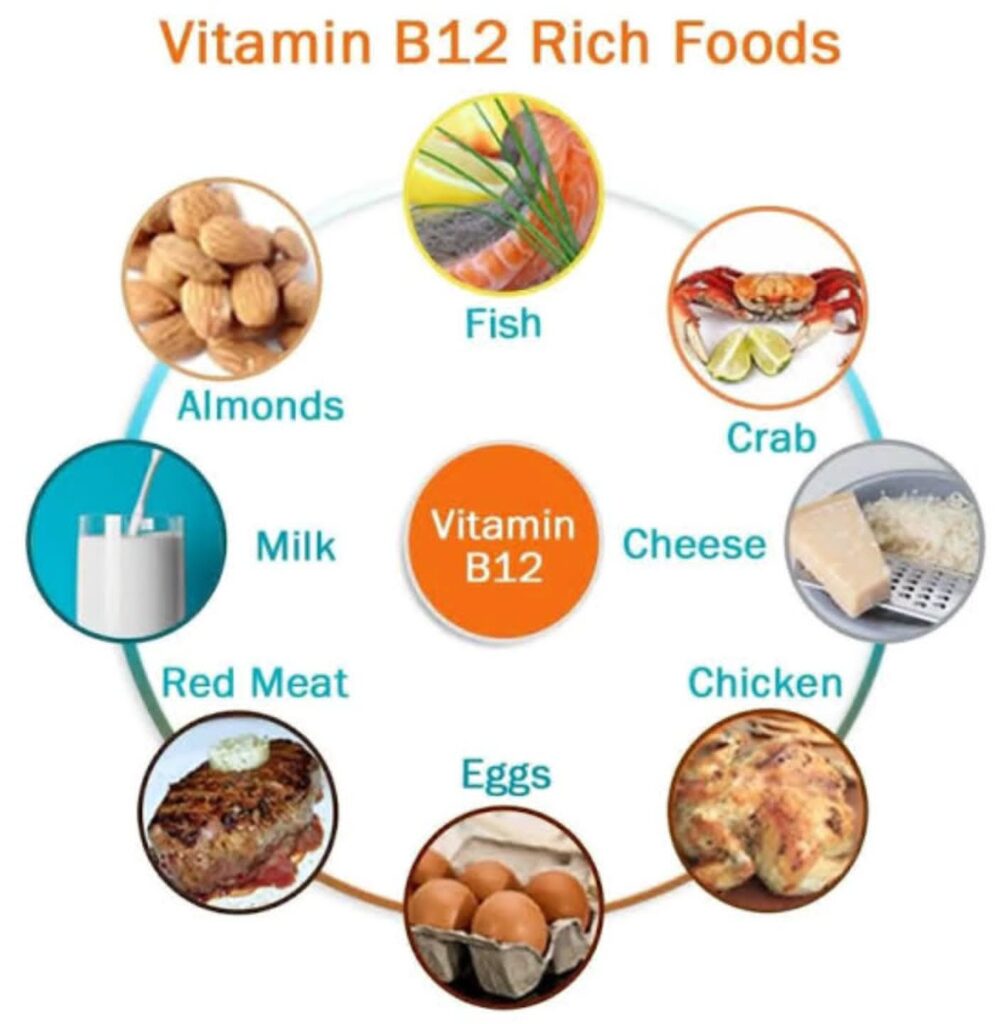
1. through diet therapy.
• Consume milk, curd, and paneer.
• Non-veg, including eggs, fish, and chicken
• Fortified cereals (cornflakes, oats)
• Yeast (for vegetarians)
• Use it in the right amount after consulting the doctor.
2. Supplements (which are injected externally by a human)
• Oral drug (tablets / capsules – 500-1000 mcg)
• (Melt with tongue down)
• Injections of B12 (most commonly cyanocobalamin or methylcobalamin)
o this injection is initially to be taken 1 injection per week.
Then one injection has to be taken every month.
If you are more deficient in vitamin B12 and the symptoms are severe, injections are more effective.
Administer this injection according to your doctor’s instructions.
Is it possible to get rid of B12 deficiency?
If you are a vegetarian, eat green leafy vegetables and fruits.
• Check the B12 report every 1 year—especially after the age of 35.
• Be more careful if you have diabetes or are on acidity medication.
Maintain a healthy digestive system.
he Complete Guide to Vitamin D Deficiency
what is Vitamin D3?
Vitamin D3 is a very important element for the human body. It is also called the ‘sunshine vitamin’ because it is mostly obtained from sunlight. Vitamin D3 is essential for the health of your bones, brain, teeth, immune system, and heart. In today’s busy life, people spend more time at home or in the office, due to which vitamin D3 deficiency is increasing rapidly. Because they don’t see the sun.
• Vitamin D3 (cholecalciferol) is a simple fat-soluble vitamin.
• Helps in the absorption of phosphorus and calcium in the human body.
• Vitamin D3 plays an important role in keeping our bones, brain muscle, and teeth strong.
It strengthens the immune system and prevents many diseases.
The main causes of vitamin D3 deficiency
1. Lack of sunlight—in today’s busy life, people spend more time at home or in the office, due to which vitamin D3 deficiency is increasing rapidly. Because they don’t see the sun.
2. Dietary deficiencies—people who are vegetarians tend not to eat foods such as milk, fish, and eggs.
3. Skin color—People with dense skin get less D3.
4. With age, the body’s ability to produce vitamin D3 decreases.
5. Obesity—eating too much fast food now leads to fat and obesity so that D3 gets stored in the fat, which the body does not get in sufficient quantity.
6. Liver and kidney diseases—People who have liver or kidney disease are unable to convert D3 into an active form.

Symptoms of Vitamin D Deficiency
• Pain in the joints and bones
• Frequent fatigue and weakness
• Muscle pain
• Frequent hair fall
• Anxiety and depression
• Frequent illness
Weakening of the teeth
• Difficulty in sleeping at night
Long-term damage
1. Osteoporosis: Bones become weak and brittle.
2. Osteomalacia—softening of the bones.
3. Rickets (in children)—bending of the bones.
4. Cardiovascular diseases—decrease in the efficiency of the heart.
5. Weakening of the immune system—the rapid onset of infections and viruses.
6. Mental health problems—depression, anxiety.
Natural sources of vitamin D3
1. Sunlight—You should watch the sunshine for 20-30 minutes every day between 7 am and 10 am.
2. Products made from milk and milk—curd, cheese, milk can also be drunk.
3. Fatty fish—such as salmon, tuna, and sardines—also provide vitamin D3 (for non-vegetarians).
4. Egg yolk (for non-vegetarians)
5. Mushrooms for both vegetarians and non-vegetarians
6. Fortified foods—cereals and milk, rich in vitamins.
Vitamin D3 Supplements
• Take tablets, capsules, or syrups as prescribed by your doctor.
• You usually get a dose of 8000 IU to 4500 IU, not more than that.
• If there is a severe deficiency of excess vitamin D3, injections are also given.
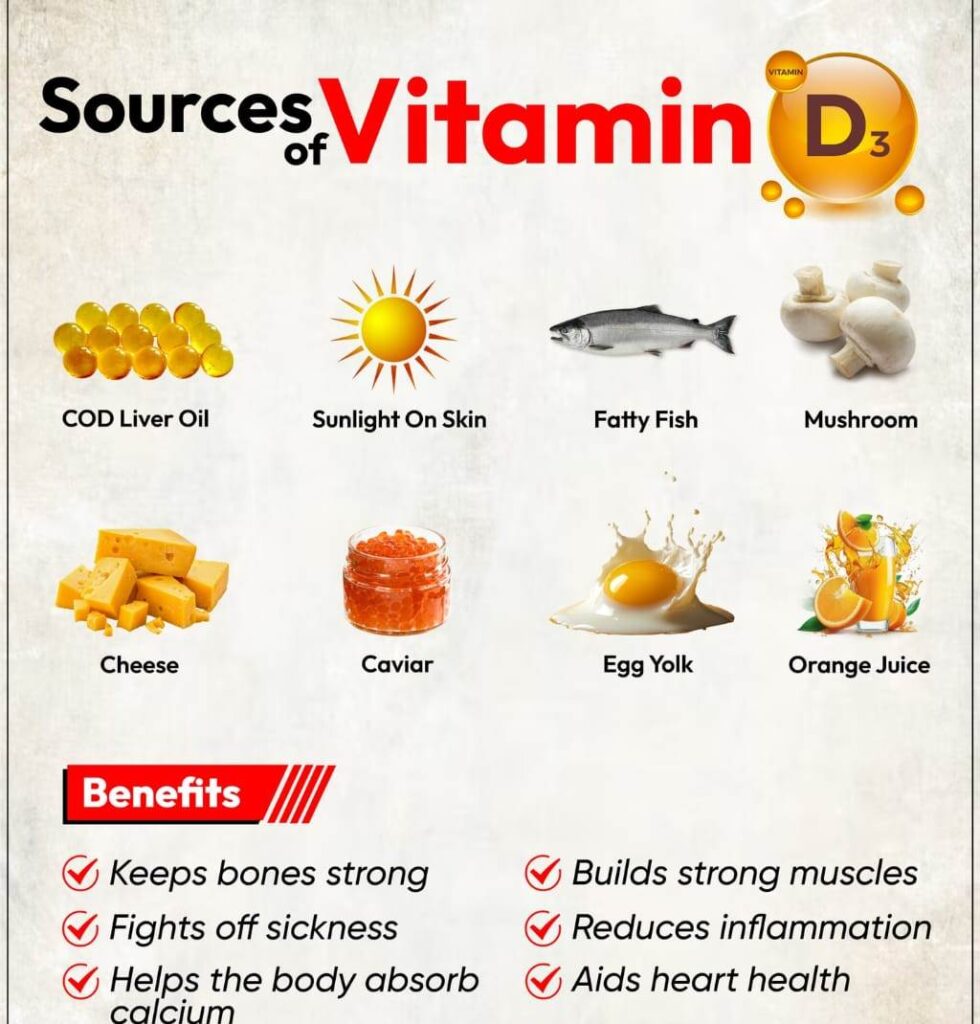
The use of vitamin D3
• A blood test is also called a 25-hydroxy vitamin D test (25 (OH) D test).
A normal level of vitamin D3 is less than 20 ng/mL.
• 20-30 ng/mL = insufficient
30-50 ng/mL is sufficient.
• 50-100 ng/mL = excellent level
How to remove the smell?
1. Spend time in the sun every day.
2. Eat foods rich in vitamin D3.
3. Take supplements when needed.
4. Get regular checkups done with the advice of a doctor.
5. Adopt a healthy lifestyle—eat a balanced diet and exercise regularly.
What are the benefits of vitamin D3?
Taking too much vitamin D can lead to vitamin D toxicity.
Always consult a doctor for this.
It is necessary to take in the right amount with calcium.
Vitamin D deficiency—what is it
• The elderly.
Pregnant women
• People with diabetes or kidney disease
• People with sensitive skin
• Older people
FAQ—Frequently Asked Questions
Q1. What tests should be done to check for vitamin D deficiency?
A 25-hydroxy vitamin D (25 (OH) D) test is required.
Q2. What is the daily requirement of Vitamin D3?
Usually 600-800 IU per day, but for the elderly it may be necessary to take up to 1000 IU.
Q3. How long does it take to get enough vitamin D3 in the sun?
20-30 minutes per day is enough.
Q4. What happens when you take too much vitamin D3?
Nausea, vomiting, abdominal pain, increased calcium levels.
Q5. Is it possible to get rid of the deficiency naturally?
Yes, it is mostly improved by sunlight and diet.